|
Записей: 92
Кожемяка Н.Н., Огородов Н.В., Мелекесцев И.В., Ермаков В.А. Некоторые особенности эволюции и геологический эффект четвертичного вулканизма Камчатки // Бюллетень вулканологических станций. 1975. № 51. С. 94-102.
|
Колосков А.В. Изотопно-геохимическая неоднородность плиоцен-четвертичных вулканитов Камчатки и проблема астеносферного диапиризма // Вестник КРАУНЦ. Серия: Науки о Земле. 2020. Вып. 47. № 3. С. 25-57. https://doi.org/10.31431/1816-5524-2020-47-3-25-57
Аннотация
Проведено обобщения изотопно-геохимического материала для плиоцен-четвертичных вулканитов Камчатского региона на картографической основе. Отмечена пространственная сопряженность Sr-изотопных аномалий умеренной и повышенной радиогенности и их хорошее геохимическое подтверждение. Что дало возможность интерпретировать эти аномалии не только как отражение в составе вулканических пород материала мантийного плюма, но и его гибридного окружения, как следствие плюм-литосферной ремобилизации. Наличие разнонаправленных геохимических трендов позволило предложить концепцию скользящих граничных значений для составов индикаторных пород внутриплитного типа и адакитов, что существенно расширило возможности их диагностики. Изотопно-геохимическая неоднородность базальтоидов региона определяется в целом особенностями концентрации пород с внутриплитными и адакитовыми геохимическими характеристиками, что позволяет считать астеносферный диапиризм основным фактором петрогенезиса плиоцен-четвертичного вулканизма Камчатки.


|
Конради С.А. Предварительный отчет горн. инж. С.А. Конради о ходе работ его партии Геологического отдела Камчатской экспедиции Ф.П. Рябушинского с ноября 1909 года по октябрь 1910 года / Отчет Императорского Русского географического общества за 1910 год. СПб: Изд. Геогр. общ.. СПб: Изд. Геогр. общ.. 1911. С. 6-17.
|
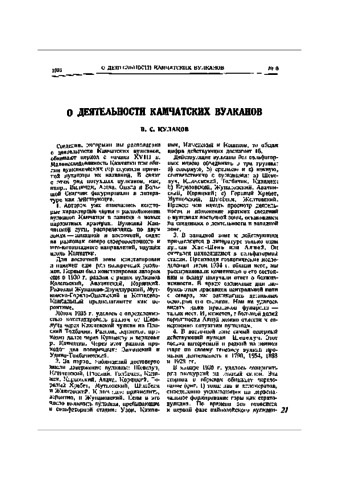
Кулаков В.С. О деятельности Камчатских вулканов // Природа. 1936. № 8. С. 21-28.
|
Максимов А.П. Взаимодействие магм и эксплозивные извержения: физико-химический аспект // Тезисы докладов ежегодной научной сессии, посвященной Дню вулканолога, 3-4 апреля 2002 г., г. Петропавловск-Камчатский. Петропавловск-Камчатский: КГПУ. 2002. С. 12-16.
|
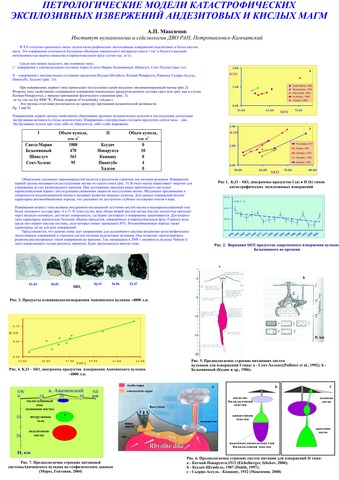
Максимов А.П. Петрологические модели катастрофических эксплозивных извержений андезитовых и кислых магм // Современные проблемы магматизма и метаморфизма. Материалы Всероссийской конференции, посвященной 150-летию академика Ф.Ю. Левинсона-Лессинга и 100-летию профессора Г.М. Саранчиной. СПб.: СПбГУ. 2012. Т. 2. С. 55.
|
Максимов А.П. Физико-химический механизм глубинной дегазации водных магм // Вулканология и сейсмология. 2008. № 5. С. 60-68.
Аннотация
На примере двух мощных извержений конуса Квицапу вулкана Сьерро-Ассуль (Чили) рассматривается проблема эффузивных извержений магм с высокими предэруптивными содержаниями летучих. Предложен физико-химический механизм дегазации магм с потерей ими летучих до появления на поверхности. Модель основана на взаимодействии магм, находившихся в разных по глубине очагах, и различии между растворимостью воды в расплаве и ее равновесной концентрацией в протяженном по вертикали магматическом теле. При этом малоглубинный очаг может аккумулировать летучие, выделяющиеся из магмы, поступающей в него из глубинного очага. Дается объяснение резких различий в характере извержений 1846–1847 и 1932 г. при идентичном химико-петрографическом составе магм.
|
Мелекесцев И.В. Действующие и потенциально активные вулканы Курило - Камчатской островной дуги в начале XXI в.: этапы исследований, определение термина "действующий вулкан", будущие извержения и вулканическая опасность // Вестник КРАУНЦ. Серия: Науки о Земле. 2006. Вып. 7. № 1. С. 15-35.
Аннотация
Выделены и рассмотрены три этапа исследований действующих и потенциально активных вулканов Камчатки и Курильских островов – ранний (1700-1935 гг.), новый (1935-1962 гг.) и новейший (1962 г.- настоящее время). Дано новое, впервые научно обоснованное определение термина «действующий вулкан». Представлены модифицированные каталоги действующих и потенциально активных вулканов Камчатки и Курильских островов. Для типичных вулканов, находящихся в I и II стадиях развития, даны долгосрочный прогноз характера и параметров будущих извержений, связанной с ними вулканической опасности.
|
Мелекесцев И.В. Катастрофическому эксплозивному извержению 28 марта 1907 г. конуса Штюбеля (вулканический массив Ксудач) - 100 лет // Материалы ежегодной конференции, посвященной Дню вулканолога, Петропавловск-Камчатский, 28-31 марта 2007 г. Петропавловск-Камчатский: ИВиС ДВО РАН. 2007. С. 3-8.
|
Мелекесцев И.В. Новейшие локальный (1955−1976 гг.) и региональный (1907−1976 гг.) эпизоды вулканического катастрофизма на Камчатке и Курильских островах // Вестник КРАУНЦ. Серия: Науки о Земле. 2018. Вып. 39. № 3. С. 26-41. https://doi.org/10.31431/1816-5524-2018-3-39-26-41
Аннотация
Впервые выявлены и описаны четко выраженные кратковременные локальный эпизод (1955−1976 гг.) вулканического катастрофизма (ВК) для Северной группы вулканов Центральной Камчатской депрессии и региональный эпизод ВК для Камчатки и Курильских островов (1907−1976 гг.). По своим масштабам (~9 км3, вес изверженных и перемещенных, ювенильных и резургентных продуктов ~16×109 т) локальный эпизод ВК — крупнейший на Камчатке и Курильских островах за последние 2000 лет. На его долю приходится также >80% от ~19×109 т продуктов, извергнутых и перемещенных всеми остальными наземными вулканами земного шара за то же время. В 1907−1976 гг. камчатскими и курильскими вулканами было извергнуто и перемещено порядка 29.5×10⁹ т ювенильного и резургентного материала, другими наземными вулканами — около 122×109 т.

|
|