|
Records: 55
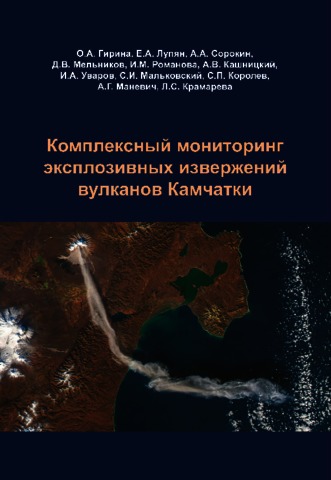
Гирина О.А., Лупян Е.А., Сорокин А.А., Мельников Д.В., Романова И.М., Кашницкий А.В., Уваров И.А., Мальковский С.И., Королев С.П., Маневич А.Г., Крамарева Л.С. Комплексный мониторинг эксплозивных извержений вулканов Камчатки / Отв. ред. Гирина О.А. Петропавловск-Камчатский: ИВиС ДВО РАН. 2018. 192 с.
Annotation
The monograph presents various data about the volcanoes of Kamchatka and describes the possibilities of studying them based on the integrated use of remote sensing, ground-based observation and numerical simulation methods and technologies. Considerable attention is paid to the construction and application of the information systems that today provide operational monitoring and studies of volcanic activity, which have been jointly developed in the recent years by the experts from the Institute of Volcanology and Seismology of the Far East Branch of the Russian Academy of Sciences (IVS FEB RAS) (Petropavlovsk-Kamchatsky), Space Research Institute RAS (Moscow), Computing Center FEB RAS (Khabarovsk) and the Far East Branch of the Research Center “Planetа” (Khabarovsk). The results of complex studies of explosive volcanic eruptions and the potential hazards of the Kamchatkan active volcanoes to the population and aviation are presented which are obtained by the scientists of IVS FEB RAS, particularly exploring the new methods, technologies and systems described in the monograph.


|
Гирина О.А., Маневич А.Г., Мельников Д.В., Романова И.М., Нуждаев А.А., Лупян Е.А., Сорокин А.А., Крамарева Л.С., Королев С.П., Демянчук Ю.В. Активность вулканов Камчатки и Курил в 2025 г. и их опасность для авиации // Вулканизм и связанные с ним процессы. Материалы XXIX научной конференции, посвященной Дню вулканолога, 30 марта - 4 апреля 2026 г. Петропавловск-Камчатский: ИВиС ДВО РАН. 2026. С. 46-49.
Annotation
В работе описана активность вулканов Камчатки и Курил в 2025 г. Эксплозивные извержения вулканов Шивелуч, Ключевской и Безымянный представляли опасность для международных и местных авиаперевозок, Карымский, Крашенинникова и Эбеко − для местных авиаперевозок.
|
Гирина О.А., Мельников Д.В., Маневич А.Г., Романова И.М., Лупян Е.А., Сорокин А.А., Крамарева Л.С., Королев С.П. Активность вулкана Крашенинникова (Камчатка) в 2025-2026 гг. // Вулканизм и связанные с ним процессы. Материалы XXIX научной конференции, посвященной Дню вулканолога, 30 марта - 4 апреля 2026 г. Петропавловск-Камчатский: ИВиС ДВО РАН. 2026. С. 50-53.
Annotation
В работе описана активность вулкана Крашенинникова в 2025-2026 гг. Первое историческое извержение вулкана началось 2 августа 2025 г. и продолжается до настоящего времени.
|
Гирина О.А., Мельников Д.В., Романова И.М., Маневич А.Г., Крашенинникова Ю.С., Сорокин А.А., Крамарева Л.С., Марченков В.В. Первое историческое извержение вулкана Крашенинникова (Камчатка) в 2025 г. по данным спутникового мониторинга в информационной системе VolSatView // Современные проблемы дистанционного зондирования Земли из космоса. 2025. Т. 22. № 4. С. 397-404. https://doi.org/10.21046/2070-7401-2025-22-4-397-404
Annotation
Krasheninnikov is an active volcano in the Eastern Volcanic Belt of Kamchatka. According to tephrochronological data, the last explosive eruption of the volcano was 1100 years ago, and the effusing of lava flows and the formation of a cinder-lava cone in the crater of the Northern Cone of the volcano occurred 400–600 years ago. According to satellite data from the information system “Remote monitoring of the activity of volcanoes in Kamchatka and the Kuril Islands” (VolSatView, http://volcanoes.smislab.ru), the first historical eruption of the volcano began at 16:38 UTC on August 2, 2025. The paper presents the first results of the study of the eruption during August 2–16, 2025. During this time, in the satellite images, there were constantly observed in the area of the volcano a large thermal anomaly and ash plumes that stretched for hundreds of kilometers in different directions from the volcano. As of August 12, the length of each of the three lava flows that effused from August 2 to 12 on the northwestern and eastern slopes of the Northern Cone was about 3 km, the total area of the lava flows reaching 2.7 km2. The eruption of Krasheninnikov Volcano continues.

|
Гирина О.А., Мельников Д.В., Романова И.М., Маневич А.Г., Лупян Е.А., Уваров И.А., Сорокин А.А., Крамарева Л.С., Королев С.П. Первое историческое извержение вулкана Крашенинникова (Камчатка) в 2025 г. по дистанционным данным // Современные проблемы дистанционного зондирования Земли из космоса. Материалы 23-ей международной конференции, 10-14 ноября 2025 г. М.: ИКИ РАН. 2025. С. 319. https://doi.org/10.21046/23DZZconf-2025a
|
Горбач Н.В., Рогозин А.Н. Особенности геологического строения и состава пород вулкана Кроноцкого – крупнейшего стратовулкана фронтальной зоны Восточного вулканического пояса Камчатки // Вулканология и сейсмология. 2023. № 5. С. 26-45. https://doi.org/10.1134/S074204632370029X
Annotation
The 2020–2022 field works gave results that were used as a basis for describing the geological structure and whole-rock compositions for Kronotsky Volcano, one of the least known eruption centers in the East Volcanic Belt (EVB), Kamchatka. The stratovolcano edifice was estimated to be 350 km3 in volume, which is much above the respective figures for the other stratovolcanoes in the EVB frontal zone. The rocks are low-K and high-Fe tholeiitic basalts and basaltic andesites (SiO2 = 47.04‒53.15 wt %; K2O = 0.24‒0.65 wt %; FeO*/MgO = 1.2‒2.89). The basalts have extremely low concentrations of silica, potassium, titanium, and phosphorus compared with the rocks of the other frontal volcanoes in Kamchatka. The petrochemical differences thus identified were used to more accurately classify structures situated at the junction between the nearby Kronotsky and Krasheninnikov volcanoes. The acquired data will make the basis for further petrologic and geo-
chemical characterization of the volcano, as well as being possibly used for reconstructing the sequence of volcanic events in the area of study, including a more accurate history of the formation of Lake Kronotsky.
|
Гущенко И.И. Извержения вулканов мира. Каталог / Отв. ред. Рудич К.Н. М.: Наука. 1979. 476 с.
|
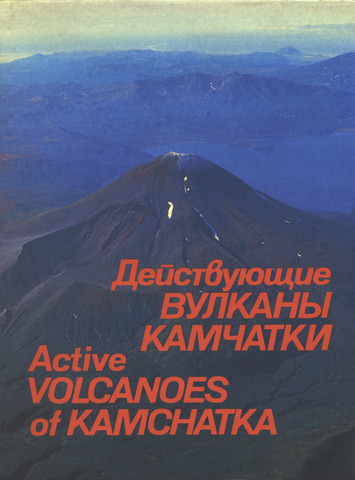
Действующие вулканы Камчатки. В 2-х т. Т. 2 / Отв. ред. Федотов С.А., Масуренков Ю.П. М.: Наука. 1991. 415 с.
Annotation
The Eastern and Southern zones of Kamchatka arc presented in the second volume. They are characterized by a weaker activity, and their volcanoes arc not as large and powerful as those of the Northern Group. But volcanic manifestations here are more diverse. Half of the volcanoes are connected with collapse calderas. Huge hydrothermal systems are here too. Among them, the famous Valley of Geisers is one of the most picturesque places on Earth.
The book is abounded with colour photographs, maps, schemes, and sketches. They enable the reader to catch uniqueness of these colourful sights and will be of interest not only for specialists in volcanology and geology, but also to a great number of nature lovers.
|
Доброхотов Ю.С. Геометрическое строение кратеров некоторых камчатских вулканов // Бюллетень вулканологической станции на Камчатке. 1949. Вып. 16. С. 26-33.
|
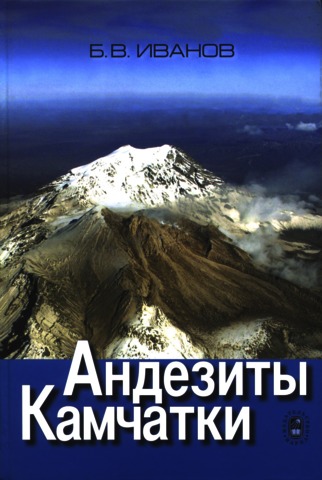
Иванов Б.В. Андезиты Камчатки (справочник химических анализов вулканитов и основных породообразующих минералов) / Отв. ред. Колосков А.В. М.: Наука. 2008. 364 с.
Annotation
This book is the first work that provides the ultimate data about chemical composition of the Kamchatka Quaternary andesites. Besides the book provides data about a phase analysis of andesites, geochemical composition, REE composition and isotopic analysis of strontium, neodymium and oxygen. The analyses are prominent for their stratification and accurate geological positioning. This allows understanding how the geological events alternated. The paper is focused on the petrogenetic peculiarities of tholeiitic (the 1st type of mantle genesis) and calc-alkali (the 2nd type of mantle-crust genesis) andesites. The book stresses that petrochemical, petrological and isotopic-geochemical correlators play a great role in distinguishing of those two types of andesites. On the basis of petrochemical database we distinguished three trends of the volcanites differentiation: stable, unstable and intermediate. These trends are supposed to be used for the determination of the volcanic activity character and types of the volcanic eruptions.
This book will be helpful as a reference guide to volcanologists, petrographers, geochemists and geologists, to those who study the genesis of volcanic rocks.

|
|