|
Records: 133
Гавриленко Г.М., Мельников Д.В. Пятнадцать лет из жизни вулкана Мутновского // Природа. 2008. № 2. С. 54-58.
|
Гирина О.А., Демянчук Ю.В., Мельников Д.В., Малик Н.А., Маневич А.Г., Нуждаев А.А., Ушаков С.В., Котенко Л.В. Действующие вулканы Камчатки и Северных Курил в январе-июне 2007 г. // Геофизический мониторинг и проблемы сейсмической безопасности Дальнего Востока России: в 2 томах. Труды региональной научно-технической конференции, Петропавловск-Камчатский, 11-17 ноября 2007 г. Петропавловск-Камчатский: ГС РАН. 2008. Т. 1. С. 68-72.
|
Гирина О.А., Лупян Е.А., Крамарева Л.С., Мельников Д.В., Маневич А.Г., Сорокин А.А., Гордеев Е.И., Уваров И.А., Кашницкий А.В., Бурцев М.А., Марченков В.В., Мазуров А.А., Константинова А.М., Романова И.М., Мальковский С.И., Королев С.П. Информационная система Дистанционный мониторинг активности вулканов Камчатки и Курил (ИС VolSatView): возможности и опыт работы // Шестнадцатая Всероссийская Открытая конференция «Современные проблемы дистанционного зондирования Земли из космоса». М.: ИКИ РАН. 2018. С. 5.
|
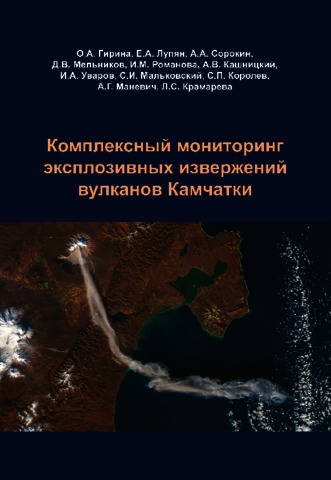
Гирина О.А., Лупян Е.А., Сорокин А.А., Мельников Д.В., Романова И.М., Кашницкий А.В., Уваров И.А., Мальковский С.И., Королев С.П., Маневич А.Г., Крамарева Л.С. Комплексный мониторинг эксплозивных извержений вулканов Камчатки / Отв. ред. Гирина О.А. Петропавловск-Камчатский: ИВиС ДВО РАН. 2018. 192 с.
Annotation
The monograph presents various data about the volcanoes of Kamchatka and describes the possibilities of studying them based on the integrated use of remote sensing, ground-based observation and numerical simulation methods and technologies. Considerable attention is paid to the construction and application of the information systems that today provide operational monitoring and studies of volcanic activity, which have been jointly developed in the recent years by the experts from the Institute of Volcanology and Seismology of the Far East Branch of the Russian Academy of Sciences (IVS FEB RAS) (Petropavlovsk-Kamchatsky), Space Research Institute RAS (Moscow), Computing Center FEB RAS (Khabarovsk) and the Far East Branch of the Research Center “Planetа” (Khabarovsk). The results of complex studies of explosive volcanic eruptions and the potential hazards of the Kamchatkan active volcanoes to the population and aviation are presented which are obtained by the scientists of IVS FEB RAS, particularly exploring the new methods, technologies and systems described in the monograph.


|
Гирина О.А., Малик Н.А., Маневич А.Г., Мельников Д.В., Нуждаев А.А., Ушаков С.В., Демянчук Ю.В., Котенко Л.В. Действующие вулканы Камчатки и Северных Курил в январе-июне 2007 г. // Проблемы комплексного геофизического мониторинга Дальнего Востока России. Тезисы докладов первой региональной научно-технической конференции. Петропавловск-Камчатский. 11-17 ноября 2007 г. Петропавловск-Камчатский: ГС РАН. 2007. С. 10
|
Гирина О.А., Малышева А.С., Маневич А.Г., Мельников Д.В., Романова И.М., Сорокин А.А., Крамарева Л.С. Дистанционный мониторинг активности вулканов Камчатки и Курил // Земля и Вселенная. 2026. № 3. С. 66-76. https://doi.org/10.7868/S0044394826030059
|
Гирина О.А., Маневич А.Г., Малик Н.А., Мельников Д.В., Ушаков С.В., Демянчук Ю.В., Котенко Л.В. Действующие вулканы Камчатки и Северных Курил в 2005 г. // Вулканология и сейсмология. 2007. № 4. С. 29-40.
Annotation
В 2005 г. произошло шесть сильных извержений на четырех вулканах Камчатки (Безымянный, Ключевской, Шивелуч, Карымский), в состоянии повышенной активности находились вулканы Авачинский, Мутновский и Горелый на Камчатке и вулканы Эбеко и Чикурачки на Северных Курильских островах. Благодаря тесному сотрудничеству коллег проекта KVERT, метеорологического центра аэропорта Елизово, консультационных центров по вулканическим пеплам в городах Токио, Анкоридж и Вашингтон (Tokyo VAAC, Anchorage VAAC and Washington VAAC) все необходимые меры для безопасности авиаполетов вблизи Камчатки были приняты; фатальных происшествий, связанных с эксплозивной активностью вулканов, не произошло.
|
Гирина О.А., Маневич А.Г., Мельников Д.В., Нуждаев А.А., Демянчук Ю.В. Активность вулканов Камчатки в 2013 г. // Вулканизм и связанные с ним процессы. Материалы региональной конференции, посвященной Дню вулканолога, 27-28 марта 2014 г. Петропавловск-Камчатский: ИВиС ДВО РАН. 2014. С. 38-45.
Annotation
В 2013 г. в состоянии извержения находились шесть вулканов Камчатки (Шивелуч, Ключевской, Толбачик, Кизимен, Карымский, Жупановский). Кроме этого, эксплозивное событие произошло на вулкане Мутновский, наблюдалась повышенная фумарольная активность вулканов Авачинский, Безымянный, Горелый и Мутновский.
|
Гирина О.А., Маневич А.Г., Романова И.М., Уваров И.А., Сорокин А.А., Королев С.П., Крамарева Л.С., Малышева А.С. Эксплозивное событие вулкана Мутновский (Камчатка) в июле 2026 г. // Современные проблемы дистанционного зондирования Земли из космоса. 2026. Т. 23. № 4. С. 435-442. https://doi.org/435-442/10.21046/2070-7401-2026-23-4-435-442
Annotation
Mutnovsky volcano is one of the most active volcanoes of the Southern Kamchatka. It is a complex edifice formed by four merged stratovolcanos with summit calderas. The Active funnel, 440×100 m in size, is cut into the western rim of the Yugo-Zapadny volcano’s crater. Mutnovsky’s modern activity is characterized mainly by fumarole activity, with gas-steam jets rising up to 300 m (rarely up to 1000 m) above the rim of the Active funnel. In the 21st century, four explosive events of the volcano occurred: March 17, 2000; April 16, 2007; July 3, 2013; and July 1, 2026. It has been shown that before the explosions in 2000, 2007, and 2026, increased heat flow was observed in the area of the volcano, respectively, in 1998–2000, 2005–2007, and 2024–2026. This was manifested by increased movement of the ice masses covering the volcano’s intracaldera slopes. The increase in heat flow in the Mutnovsky area prior to the 2026 explosive event was clearly evident in the volcano’s increased thermal activity, as determined by satellite data. It is expected that the next explosive event in the Active funnel could occur in the spring or summer of 2032 or 2033.

|
Гирина О.А., Мельников Д.В., Маневич А.Г. Спутниковый мониторинг вулканов Камчатки и Северных Курил // Современные проблемы дистанционного зондирования Земли из космоса. 2017. Т. 14. № 6. С. 194-209. https://doi.org/10.21046/2070-7401-2017-14-6-194-209
Annotation
There are 36 active volcanoes in Kamchatka and Northern Kuriles, from 3 to 8 volcano eruptions occur here every year. Daily satellite monitoring of volcanoes has been performed by the Kamchatka Volcanic Eruption Response Team (KVERT) since 1997 in cooperation with colleagues from the Alaska Volcano Observatory (USA). Since 2002, KVERT scientists have processing and analyzing primary images of satellite systems NOAA (AVHRR), TERRA and AQUA (MODIS), etc. in close–to–real time to detect ash plumes and thermal anomalies on active volcanoes. The multiparameter analysis of the available published information about volcanoes, as well as visual and satellite data obtained by KVERT scientists during 24 years of daily monitoring of volcanic activity, made it possible to identify the main features of the activity at each of the active volcanoes and assess their degree of danger for air transportation and population of the peninsula. With the creation in 2011 of the information system “Remote monitoring activity of volcanoes of Kamchatka and the Kuriles (VolSatView)”, volcanologists opportunity have the opportunities that have no analogues in the world to conduct satellite observations of active volcanoes. VolSatView combines a wide range of data from various satellite systems coming from different sources and allows us to process operational and retrospective satellite information directly in the web–interface by means of specially created tools, to compare it with video information, to simulate ash plumes propagation, to classify various volcanogenic objects and etc. VolSatView enables to solve problems at different levels — from on–line monitoring of volcanoes activity to the fundamental problems in volcanology. The character of volcanic activity changes and the actuality of solving the problem of “how the volcano works” remain. To accomplish this task and for searching precursors of explosive volcanic eruptions, it is necessary to continue long–term remote observations of the volcanoes in the region; to study changes in their activity with time; to compare behavior of volcanoes supplying the eruptive products of similar and contrast compositions to the earth surface.

|
|