|
Записей: 368
National Report for the International Association of Volcanology and Chemistry of the Earth’s Interior of the International Union of Geodesy and Geophysics 2011–2014. Presented to the XXVI General Assembly of the IUGG Geoinf. Res. Papers, 3, BS3011. / Ed. Churikova T.G., Gordeychik B.N., Fedotov S.A. Moscow: GCRAS Publ. 2015. 185 p. doi: 10.2205/2015IUGG-RU-IAVCEI.
Аннотация
In the present National Report, major results are given of research conducted by Russian scientists in 2011–2014 on the topics of the International Association of Volcanology and Chemistry of the Earth’s Interior (IAVCEI) of the International Union of Geodesy and Geophysics. Kamchatka Peninsula with its famous Klyuchevskaya Group of volcanoes is the most volcanically active area in Russia and one of the most active in the world. Majority of researches and scientific results on Volcanology and Geochemistry of the Earth’s Interior during 2011–2014 were achieved in this region including recent data on new Tolbachik fissure eruption in 2012–2013. Besides it, the scientific results on the magmatism outside Russia, which were achieved by Russian scientists, are also included in this review. Major achievements in the chemistry of the Earth, geothermy, geodynamics, geochronology and deep mantle structure are featured. The studies as for the single volcanoes as well the regional observations are outlined. The theoretical and applied efforts connected to the volcanological processes are considered. The main conclusions are illustrated by summarized figures. All the required references are given.


|
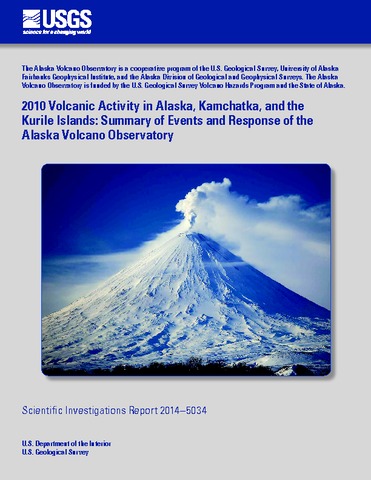
Neal C.A., Herrick J.A., Girina O.A., Chibisova M.V., Rybin A.V., McGimsey R.G., Dixon J. 2010 Volcanic activity in Alaska, Kamchatka, and the Kurile Islands: Summary of events and response of the Alaska Volcano Observatory. 2014. 76 p.
Аннотация
The Alaska Volcano Observatory (AVO) responded to eruptions, possible eruptions, volcanic unrest or suspected unrest at 12 volcanic centers in Alaska during 2010. The most notable volcanic activity consisted of intermittent ash emissions from long-active Cleveland volcano in the Aleutian Islands. AVO staff also participated in hazard communication regarding eruptions or unrest at seven volcanoes in Russia as part of an ongoing collaborative role in the Kamchatka and Sakhalin Volcanic Eruption Response Teams.
|
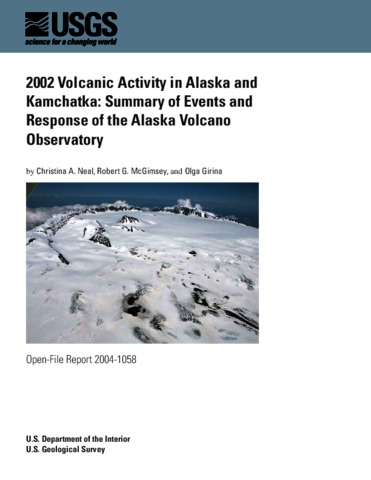
Neal C.A., McGimsey R.G., Girina O.A. 2002 Volcanic Activity in Alaska and Kamchatka: Summary of Events and Response of the Alaska Volcano Observatory Open-File Report 2004-1058. 2004. 55 p.
|
Nekrylov Nikolay, Kamenetsky V.S., Savelyev D.P., Gorbach N.V., Kontonikas-Charos Alkiviadis, Palesskii Stanislav V., Shcherbakov Vasily D., Kutyrev Anton V., Savelyeva O.L., Korneeva Alina, Kozmenko Olga A., Zelenski Michael E. Platinum-group elements in Late Quaternary high-Mg basalts of eastern Kamchatka: Evidence for minor cryptic sulfide fractionation in primitive arc magmas // Lithos. 2022. Vol. 412. № 106838. P. 1-14. https://doi.org/10.1016/j.lithos.2022.106608.
Аннотация
The geochemical variations of magmas across and along supra-subduction zones (SSZ) have been commonly attributed to profound changes in the phase and chemical compositions of the mantle source and subduction-derived melt and fluid fluxes, as well as the physical parameters (e.g. depth, temperature, oxygen fugacity etc) of slab dehydration, mineral breakdown and melting. Here we test the variability of the Late Quaternary primitive magmas in the southern and northern parts of the meridionally oriented Eastern Volcanic Belt (EVB) of Kamchatka, with a slab depth varying from 60 to 160 km. Eight high-Mg (Mg# > 60 mol%) basalts were characterized for major, trace and platinum-group element (PGE) abundances, as well as the compositions of olivine phenocrysts and olivine-hosted spinel inclusions. The basalts in our study are geochemically typical of SSZ magmas and contain similar liquidus assemblages of forsteritic olivine (Mg# 78–92 mol%), low-Ti Cr-spinel and clinopyroxene. Although the absolute abundances of major and trace elements, and their ratios, in the basalts fluctuate to some extent, the observed variability cannot be correlated with any of considered parameters in the geometry of the Kamchatka SSZ and conditions of melting. This unexpected result led to the evaluation of the platinum-group element (PGE) systematics against the lithophile and chalcophile trace element geochemistry and the compositions of phenocrysts. Total whole-rock PGE content varies from 2.3 to 11.7 ppb, whereas the normalized PGE concentration patterns are typical for supra-subduction zones magmas and broadly similar in all studied samples. They are enriched in Rh, Pd and Pt relative to mid-ocean ridge basalts (MORB) and have nearly identical concentrations of Ir-group PGE. The only parameter that correlates well with PGE contents is the average Mg# of olivine phenocrysts from 84 to 90.3 mol%. This is interpreted to result from minor cryptic fractionation of sulfide melt, together with primitive olivine, in low-to-mid crustal conditions. Negative Ru anomalies on chondrite-normalized diagrams correspond to the Fe2+/Fe3+ ratios in spinel (a proxy for magma redox conditions), which reflects a replacement of monosulfide solid solution by laurite in the mantle wedge during oxidation.
|
Ozerov A.Yu., Girina O.A., Zharinov N.A., Belousov A.B., Demyanchuk Yu.V. Eruptions in the Northern Group of Volcanoes, in Kamchatka, during the Early 21st Century // Journal of Volcanology and Seismology. 2020. Vol. 14. P. 1-17. https://doi.org/10.1134/S0742046320010054.
Аннотация
The early 21st century saw increased eruption activity of major volcanoes in the Northern Group of Kamchatka, namely, Sheveluch, Klyuchevskoy, Bezymianny, and the Tolbachik Fissure Zone. The growth of an extrusive dome on Sheveluch andesitic volcano has occurred, with the dome reaching a height of 600 m after 38 years of nearly uninterrupted eruption activity. An 8-year period of relative quiet was followed by ten summit eruptions and two lateral vent openings on the Klyuchevskoy basaltic volcano. Explosive–effusive eruptions were observed nearly every year on the Bezymianny andesitic volcano. A 36-year quiet period gave way to a new eruption in the Tolbachik regional fissure zone.
|
Ponomareva V., Kyle P., Pevzner M., Sulerzhitsky L., Hartman M. Holocene eruptive history of Shiveluch Volcano, Kamchatka Peninsula, Russia / Volcanism and Subduction: The Kamchatka Region. Geophysical Monograph Series. Washington, D. C.: American Geophysical Union. 2007. Vol. 172. P. 263-282. doi:10.1029/172GM19.
Аннотация
The Holocene eruptive history of Shiveluch volcano, Kamchatka Peninsula, has been reconstructed using geologic mapping, tephrochronology, radiocarbon dating, XRF and microprobe analyses. Eruptions of Shiveluch during the Holocene have occurred with irregular repose times alternating between periods of explosive activity and dome growth. The most intense volcanism, with frequent large and moderate eruptions occurred around 6500–6400 BC, 2250–2000 BC, and 50–650 AD, coincides with the all-Kamchatka peaks of volcanic activity. The current active period started around 900 BC; since then the large and moderate eruptions has been following each other in 50–400 yrs-long intervals. This persistent strong activity can be matched only by the early Holocene one.
Most Shiveluch eruptions during the Holocene produced medium-K, hornblendebearing andesitic material characterized by high MgO (2.3–6.8 wt %), Cr (47–520 ppm), Ni (18–106 ppm) and Sr (471–615 ppm), and low Y (> 18 ppm). Only two mafic tephras erupted about 6500 and 2000 BC, each within the period of most intense activity.
Many past eruptions from Shiveluch were larger and far more hazardous then the historical ones. The largest Holocene eruption occurred ∼1050 AD and yielded >2.5 km3 of tephra. More than 10 debris avalanches took place only in the second half of the Holocene. Extent of Shiveluch tephra falls exceeded 350 km; travel distance of pyroclastic density currents was > 22 km, and that of the debris avalanches ≤20 km.

|
Ponomareva V.V., Pendea I. Florin, Zelenin Egor, Portnyagin Maxim, Gorbach N.V., Pevzner M.M., Plechova A.A., Derkachev Alexander, Rogozin Aleksei, Garbe-Schönberg Dieter The first continuous late Pleistocene tephra record from Kamchatka Peninsula (NW Pacific) and its volcanological and paleogeographic implications // Quaternary Science Reviews. 2021. Vol. 257. 1. № Article 106838. P. 1-23. https://doi.org/10.1016/j.quascirev.2021.106838.
Аннотация
The Kamchatka volcanic arc (NW Pacific) is one of the most productive arcs in the world, known for its highly explosive activity. At the same time, the Kamchatkan record of late Pleistocene explosive eruptions has remained fragmentary. Here we present the first continuous record of Kamchatkan explosive activity between ~12 and 30 ka, which includes ~70 eruptions and extends the earlier reconstructed Holocene sequence for another 20 ka. Our record is based on geochemical correlations of 14C-dated tephras that represent all Kamchatka volcanic zones and are buried in lacustrine deposits along the 200 km stretch of the Central Kamchatka Depression (CKD). The accompanying geochemical database of volcanic glass compositions includes 3104 new electron microprobe and 221 LA-ICP-MS analyses. The data show that during the period under study, large silicic explosive eruptions peaked at 30e25 ka. Later times were mostly associated with the moderate activity from northern CKD volcanoes Shiveluch and Zarechny. Our tephra record provides the first tephrochronological model for dating and correlating Central Kamchatka late Pleistocene deposits and gives us some insight into the timing of glacial advances in the Kliuchevskoi volcanic group and volcanic response to the onset of the Last Glacial Maximum and glacial unloading at its termination. In addition, studied sections of lacustrine deposits tightly linked by tephra markers suggest the existence of a large lake system within the CKD for ~20 kyr until its final discharge at ~12 ka BP.
|
Ponomareva V.V., Pevzner M.M., Melekestsev I.V. Large debris avalanches and associated eruptions in the Holocene eruptive history of Shiveluch Volcano, Kamchatka, Russia // Bulletin of Volcanology. 1998. Vol. 59. № 7. P. 490-505. doi: 10.1007/s004450050206.
Аннотация
Shiveluch Volcano, located in the Central Kamchatka Depression, has experienced multiple flank failures during its lifetime, most recently in 1964. The overlapping deposits of at least 13 large Holocene debris avalanches cover an area of approximately 200 km2 of the southern sector of the volcano. Deposits of two debris avalanches associated with flank extrusive domes are, in addition, located on its western slope. The maximum travel distance of individual Holocene avalanches exceeds 20 km, and their volumes reach ∼3 km3. The deposits of most avalanches typically have a hummocky surface, are poorly sorted and graded, and contain angular heterogeneous rock fragments of various sizes surrounded by coarse to fine matrix. The deposits differ in color, indicating different sources on the edifice. Tephrochronological and radiocarbon dating of the avalanches shows that the first large Holocene avalanches were emplaced approximately 4530–4350 BC. From ∼2490 BC at least 13 avalanches occurred after intervals of 30–900 years. Six large avalanches were emplaced between 120 and 970 AD, with recurrence intervals of 30–340 years. All the debris avalanches were followed by eruptions that produced various types of pyroclastic deposits. Features of some surge deposits suggest that they might have originated as a result of directed blasts triggered by rockslides. Most avalanche deposits are composed of fresh andesitic rocks of extrusive domes, so the avalanches might have resulted from the high magma supply rate and the repetitive formation of the domes. No trace of the 1854 summit failure mentioned in historical records has been found beyond 8 km from the crater; perhaps witnesses exaggerated or misinterpreted the events.

|
Ponomareva Vera A chronology of the Holocene eruptions from the northern Kamchatka volcanoes based on linking major C14-dated tephra sequences with the help of EMPA glass data // Quaternary International. 2012. Vol. 279–28. P. 383 doi: 10.1016/j.quaint.2012.08.1191.
Аннотация
Volcanic eruptions from Kamchatka have deposited many unique tephra layers over a large region within the North Pacific, providing important isochrons between key sites such as marine ODP core 883 (Pacific Ocean, Detroit Seamount) and Elgygytgyn Lake (Chukotka, eastern Siberia). Here we present a compilation of C14 dates on major Holocene tephras from the volcanically highly active region, based on decades of detailed stratigraphical fieldwork on Shiveluch, Kliuchevskoy, and other volcanoes.The 12-m thick tephra sequence at the Kliuchevskoy slope has been continuously accumulating during the last ∼11 ka. It contains over 200 visible individual tephra layers and no datable organic material. The section is dominated by dark-gray mafic cinders related to Kliuchevskoy activity. In addition, it contains 30 light-colored thin layers of silicic tephra from distant volcanoes including 11 layers from Shiveluch volcano located only 65 km to the north. We have used EMPA glass analysis to correlate most of the marker tephra layers to their source eruptions dated earlier by C14 (Braitseva et al., 1997; Ponomareva et al., 2007), and in this way linked Kliuchevskoy tephra sequence to sequences at other volcanoes including Shiveluch. The C14 dates and tephras from the northern Kamchatka are then combined into a single Bayesian framework taking into account stratigraphical ordering within and between the sites. This approach has allowed us to enhance the reliability and precision of the estimated ages for the eruptions. Age-depth models are constructed to analyse changes in deposition rates and volcanic activity throughout the Holocene. This detailed chronology of the eruptions serves as a basis for understanding temporal patterns in the eruption sequence and geochemical variations of magmas. This research could prove important for the long-term forecast of eruptions and volcanic hazards.
|
Ponomareva Vera V., Melekestsev Ivan V., Dirksen Oleg V. Sector collapses and large landslides on Late Pleistocene–Holocene volcanoes in Kamchatka, Russia // Journal of Volcanology and Geothermal Research. 2006. Vol. 158. № 1-2. P. 117-138. doi:10.1016/j.jvolgeores.2006.04.016.
Аннотация
On Kamchatka, detailed geologic and geomorphologic mapping of young volcanic terrains and observations on historical eruptions reveal that landslides of various scales, from small (0.001 km3) to catastrophic (up to 20–30 km3), are widespread. Moreover, these processes are among the most effective and most rapid geomorphic agents. Of 30 recently active Kamchatka volcanoes, at least 18 have experienced sector collapses, some of them repetitively. The largest sector collapses identified so far on Kamchatka volcanoes, with volumes of 20–30 km3 of resulting debris-avalanche deposits, occurred at Shiveluch and Avachinsky volcanoes in the Late Pleistocene. During the last 10,000 yr the most voluminous sector collapses have occurred on extinct Kamen' (4–6 km3) and active Kambalny (5–10 km3) volcanoes. The largest number of repetitive debris avalanches (> 10 during just the Holocene) has occurred at Shiveluch volcano. Landslides from the volcanoes cut by ring-faults of the large collapse calderas were ubiquitous. Large failures have happened on both mafic and silicic volcanoes, mostly related to volcanic activity. Orientation of collapse craters is controlled by local tectonic stress fields rather than regional fault systems.
Specific features of some debris avalanche deposits are toreva blocks — huge almost intact fragments of volcanic edifices involved in the failure; some have been erroneously mapped as individual volcanoes. One of the largest toreva blocks is Mt. Monastyr' — a ∼ 2 km3 piece of Avachinsky Somma involved in a major sector collapse 30–40 ka BP.
Long-term forecast of sector collapses on Kliuchevskoi, Koriaksky, Young Cone of Avachinsky and some other volcanoes highlights the importance of closer studies of their structure and stability.

|
|