|
Записей: 546
Ponomareva Vera A chronology of the Holocene eruptions from the northern Kamchatka volcanoes based on linking major C14-dated tephra sequences with the help of EMPA glass data // Quaternary International. 2012. Vol. 279–28. P. 383 . https://doi.org/10.1016/j.quaint.2012.08.1191
Аннотация
Volcanic eruptions from Kamchatka have deposited many unique tephra layers over a large region within the North Pacific, providing important isochrons between key sites such as marine ODP core 883 (Pacific Ocean, Detroit Seamount) and Elgygytgyn Lake (Chukotka, eastern Siberia). Here we present a compilation of C14 dates on major Holocene tephras from the volcanically highly active region, based on decades of detailed stratigraphical fieldwork on Shiveluch, Kliuchevskoy, and other volcanoes.The 12-m thick tephra sequence at the Kliuchevskoy slope has been continuously accumulating during the last ∼11 ka. It contains over 200 visible individual tephra layers and no datable organic material. The section is dominated by dark-gray mafic cinders related to Kliuchevskoy activity. In addition, it contains 30 light-colored thin layers of silicic tephra from distant volcanoes including 11 layers from Shiveluch volcano located only 65 km to the north. We have used EMPA glass analysis to correlate most of the marker tephra layers to their source eruptions dated earlier by C14 (Braitseva et al., 1997; Ponomareva et al., 2007), and in this way linked Kliuchevskoy tephra sequence to sequences at other volcanoes including Shiveluch. The C14 dates and tephras from the northern Kamchatka are then combined into a single Bayesian framework taking into account stratigraphical ordering within and between the sites. This approach has allowed us to enhance the reliability and precision of the estimated ages for the eruptions. Age-depth models are constructed to analyse changes in deposition rates and volcanic activity throughout the Holocene. This detailed chronology of the eruptions serves as a basis for understanding temporal patterns in the eruption sequence and geochemical variations of magmas. This research could prove important for the long-term forecast of eruptions and volcanic hazards.

|
Ponomareva Vera V., Melekestsev Ivan V., Dirksen Oleg V. Sector collapses and large landslides on Late Pleistocene–Holocene volcanoes in Kamchatka, Russia // Journal of Volcanology and Geothermal Research. 2006. Vol. 158. № 1-2. P. 117-138. doi:10.1016/j.jvolgeores.2006.04.016
Аннотация
On Kamchatka, detailed geologic and geomorphologic mapping of young volcanic terrains and observations on historical eruptions reveal that landslides of various scales, from small (0.001 km3) to catastrophic (up to 20–30 km3), are widespread. Moreover, these processes are among the most effective and most rapid geomorphic agents. Of 30 recently active Kamchatka volcanoes, at least 18 have experienced sector collapses, some of them repetitively. The largest sector collapses identified so far on Kamchatka volcanoes, with volumes of 20–30 km3 of resulting debris-avalanche deposits, occurred at Shiveluch and Avachinsky volcanoes in the Late Pleistocene. During the last 10,000 yr the most voluminous sector collapses have occurred on extinct Kamen' (4–6 km3) and active Kambalny (5–10 km3) volcanoes. The largest number of repetitive debris avalanches (> 10 during just the Holocene) has occurred at Shiveluch volcano. Landslides from the volcanoes cut by ring-faults of the large collapse calderas were ubiquitous. Large failures have happened on both mafic and silicic volcanoes, mostly related to volcanic activity. Orientation of collapse craters is controlled by local tectonic stress fields rather than regional fault systems.
Specific features of some debris avalanche deposits are toreva blocks — huge almost intact fragments of volcanic edifices involved in the failure; some have been erroneously mapped as individual volcanoes. One of the largest toreva blocks is Mt. Monastyr' — a ∼ 2 km3 piece of Avachinsky Somma involved in a major sector collapse 30–40 ka BP.
Long-term forecast of sector collapses on Kliuchevskoi, Koriaksky, Young Cone of Avachinsky and some other volcanoes highlights the importance of closer studies of their structure and stability.


|
Ponomareva Vera, Portnyagin Maxim, Derkachev Alexander, Pendea I. Florin, Bourgeois Joanne, Reimer Paula J., Garbe-Schönberg Dieter, Krasheninnikov Stepan, Nürnberg Dirk Early Holocene M~6 explosive eruption from Plosky volcanic massif (Kamchatka) and its tephra as a link between terrestrial and marine paleoenvironmental records // International Journal of Earth Sciences. 2013. Vol. 102. № 6. P. 1673-1699. doi:10.1007/s00531-013-0898-0
Аннотация
We report tephrochronological and geochemical data on early Holocene activity from Plosky volcanic massif in the Kliuchevskoi volcanic group, Kamchatka Peninsula. Explosive activity of this volcano lasted for ~1.5 kyr, produced a series of widely dispersed tephra layers, and was followed by profuse low-viscosity lava flows. This eruptive episode started a major reorganization of the volcanic structures in the western part of the Kliuchevskoi volcanic group. An explosive eruption from Plosky (M~6), previously unstudied, produced tephra (coded PL2) of a volume of 10–12 km3 (11–13 Gt), being one of the largest Holocene explosive eruptions in Kamchatka. Characteristic diagnostic features of the PL2 tephra are predominantly vitric sponge-shaped fragments with rare phenocrysts and microlites of plagioclase, olivine and pyroxenes, medium- to high-K basaltic andesitic bulk composition, high-K, high-Al and high-P trachyandesitic glass composition with SiO2 = 57.5–59.5 wt%, K2O = 2.3–2.7 wt%, Al2O3 = 15.8–16.5 wt%, and P2O5 = 0.5–0.7 wt%. Other diagnostic features include a typical subduction-related pattern of incompatible elements, high concentrations of all REE (>10× mantle values), moderate enrichment in LREE (La/Yb ~ 5.3), and non-fractionated mantle-like pattern of LILE. Geochemical fingerprinting of the PL2 tephra with the help of EMP and LA-ICP-MS analyses allowed us to map its occurrence in terrestrial sections across Kamchatka and to identify this layer in Bering Sea sediment cores at a distance of >600 km from the source. New high-precision 14C dates suggest that the PL2 eruption occurred ~10,200 cal BP, which makes it a valuable isochrone for early Holocene climate fluctuations and permits direct links between terrestrial and marine paleoenvironmental records. The terrestrial and marine 14C dates related to the PL2 tephra have allowed us to estimate an early Holocene reservoir age for the western Bering Sea at 1,410 ± 64 14C years. Another important tephra from the early Holocene eruptive episode of Plosky volcano, coded PL1, was dated at 11,650 cal BP. This marker is the oldest geochemically characterized and dated tephra marker layer in Kamchatka to date and is an important local marker for the Younger Dryas—early Holocene transition. One more tephra from Plosky, coded PL3, can be used as a marker northeast of the source at a distance of ~110 km.

|
Portnyagin Maxim, Hoernle Kaj, Plechov Pavel Yu., Mironov Nikita, Khubunaya Sergey Constraints on mantle melting and composition and nature of slab components in volcanic arcs from volatiles (H2O, S, Cl, F) and trace elements in melt inclusions from the Kamchatka // Earth and Planetary Science Letters. 2007. Vol. 255. № 1-2. P. 53-69. https://doi.org/10.1016/j.epsl.2006.12.005
Аннотация
New and published data on the composition of melt inclusions in olivine (Fo73_yi) from volcanoes of the Kamchatka and northern Kurile Arc are used 1) to evaluate the combined systematics of volatiles (H2O, S, Cl, F) and incompatible trace elements in their parental magmas and mantle sources, 2) to constrain thermal conditions of mantle melting, and 3) to estimate the composition of slab-derived components. We demonstrate that typical Kamchatkan arc-type magmas originate through 5-14% melting of sources similar or slightly more depleted in HFSE (with up to -1 wt.% previous melt extraction) compared to MORB-source mantle, but strongly enriched in H2O,B, Be, Li, Cl. F, LILE, LREE, Th and U. Mean H2O in parental melts f 1.8-2.6 wt.%) decreases with increasing depth to the subducting slab and correlates negatively with both 'fluid-immobile* (e.g. Ti, Na, LREE) and most 'fluid-mobile' (e.g. LILE, S, Cl, F) incompatible elements, implying that solubility in hydrous fluids or amount of water does not directly control the abundance of 'fluid-mobile' incompatible elements. Strong correlation is observed between H2O/Ce and B/Zr (or B/LREE) ratios. Both, calculated H2O in mantle sources (0.1-0.4%) and degrees of melting (5-14%) decrease with increasing depth to the slab indicating that the ultimate source of water in the sub-arc mantle is the subducting oceanic plate and that water flux (together with mantle temperature) governs theextent of mantle melting beneath Kamchatka. A parameterized hydrous melting model [Katzetal. 2003, G3,4(9), 1073] is utilized to estimate that mantle melting beneath Kamchatka occurs at or below the dry peridotite solidus (1245-1330 °C at 1.5-2.0 GPa). Relatively high mantle temperatures (yet lower than beneath back-arc basins and ocean ridges) suggest substantial corner flow driven mantle upwelling beneath Kamchatka in agreement with numerical models implying non-isoviscous mantle wedge rheology. Data from Kamchatka, Mexico and Central America indicate that <5% melting would lake place beneath continental arcs without water flux from the subducting slab. A broad negative correlation appears to exist between crustal thickness and the temperature of magma generation beneath volcanic arcs with larger amounts of decompression melting occurring beneath thinner arc crust (Uihosphere). In agreement with the high mantle temperatures, we observe a systematic change in the composition of slab components with increasing slab depth from solute-poor hydrous fluid beneath the volcanic front to solute-rich hydrous melt or supercritical liquid at deeper depths beneath the rear arc. The solute-rich slab component dominates the budget of LILE, LREE,Th and U in the magmas and originates through wet-melting of subducted sediments and/or altered oceanic crust at > 120 km depth. Melting of the upper parts of subducting plates under water flux from deeper luhosphere (e.g. serpentinites), combined with high .emperatures in the mantie wedge, may be a more common process beneath volcanic arcs than has been previously recognized. 0 2006 Klsevier B.V. All rights reserved.

|
Portnyagin Maxim, Hoernle Kaj, Plechov Pavel, Mironov Nikita, Khubunaya Sergey Constraints on mantle melting and composition and nature of slab components in volcanic arcs from volatiles (H2O, S, Cl, F) and trace elements in melt inclusions from the Kamchatka Arc // Earth and Planetary Science Letters. 2007. Т. 255. № 1-2. С. 53-69. doi:10.1016/j.epsl.2006.12.005
|
Portnyagin Maxim, Ponomareva Vera Kliuchevskoi volcano diary // International Journal of Earth Sciences. 2012. Vol. 101. № 1. P. 195 doi:10.1007/s00531-011-0710-y
Аннотация
Numerous ash layers deposited at the slopes of Kliuchevskoi volcano provide a detailed and continuous record of its explosive activity during the last ca. 10,000 years.
|
Portnyagin Maxim, Ponomareva Vera, Bindeman Ilya, Bogaard Christel, Krasheninnikov Stepan, Bergal-Kuvikas Olga, Mironov Nikita, Plechova Anastasia, Hoernle Kaj Millennium-scale major element variations of Klyuchevskoy volcano magmas (Kamchatka) revealed from high-resolution study of tephra deposits // IAVCEI, Reykjavik. 2008.
|
Roman Alberto, Bergal-Kuvikas Olga, Shapiro Nikolay M., Gordeev E.I., Taisne Benoit, Jaupart Claude Control on the organization of the plumbing system of subduction volcanoes: the role of volatiles and edifice load // AGU Fall Meeting Abstracts. 2017.
|
Shirokov V.A. Some Procedural Aspects of Comprehensive Prediction of Flank Eruptions of Klyuchevskoi Volcano (Kamchatka) // Volcanology and Seismology. 1989. Vol. 7. № 6. P. 921-942.
|
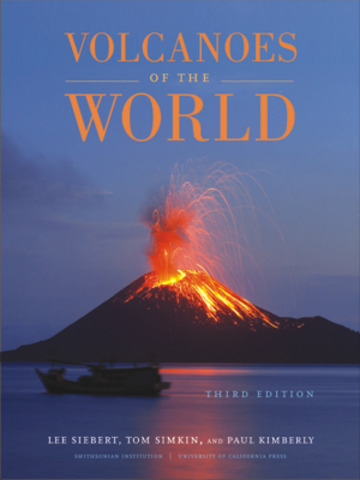
Siebert L., Simkin T., Kimberly P. Volcanoes of the World. Berkeley: University of California Press. 2010. 568 p.
Аннотация
This impressive scientific resource presents up-to-date information on ten thousand years of volcanic activity on Earth. In the decade and a half since the previous edition was published new studies have refined assessments of the ages of many volcanoes, and several thousand new eruptions have been documented. This edition updates the book's key components: a directory of volcanoes active during the Holocene; a chronology of eruptions over the past ten thousand years; a gazetteer of volcano names, synonyms, and subsidiary features; an extensive list of references; and an introduction placing these data in context. This edition also includes new photographs, data on the most common rock types forming each volcano, information on population densities near volcanoes, and other features, making it the most comprehensive source available on Earth's dynamic volcanism.
|
|